
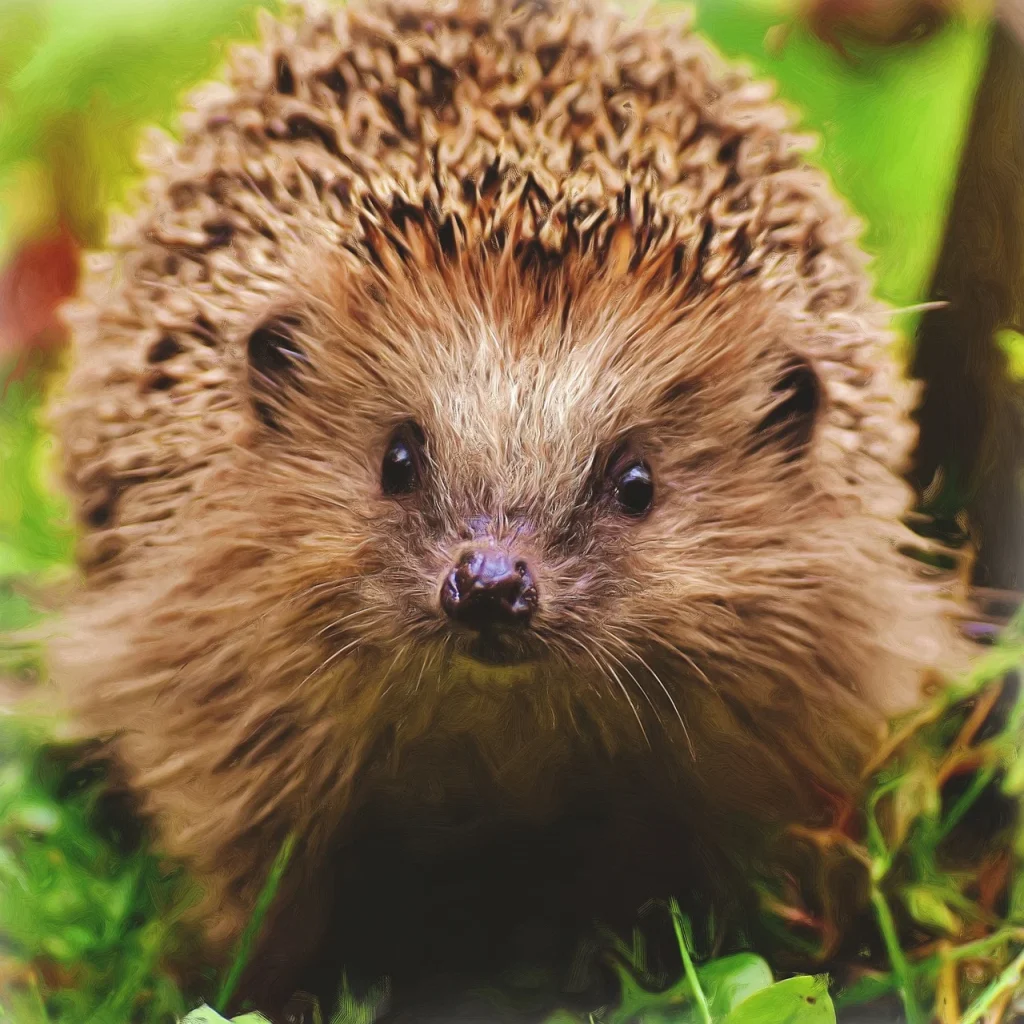
Sporting around 5-7,000 dark brown spines made of keratin, with a lighter brown furry face and belly, Erinaceus europaeus – the hedgehog – holds a place dear in our hearts, despite their prickly appearance! These nocturnal creatures, measuring around 20-30cm in length, spend much of their lives alone, except during the mating season. Travelling up to a mile each night, they are a welcome visitor to the garden – being partial to eating slugs and snails, as well as caterpillars, beetles, worms, they are a great help with pest control! You will likely be able to hear them snuffling around in the garden, if they are present, as they hunt out insects, fruit, berries, fungi and maybe occasionally a small vertebrates, such as a frog.
May is mating season. This is the only time the male and female come together. The female will give birth to around 4-5 hoglets after around a four-week gestation. She cares for the hoglets alone, leaving the nest to forage and returning to feed her young until they are old enough to accompany her, to learn for themselves. Mature females may mate for a second time during the year, but this can leave these later hoglets short on time to put on enough weight to see them through winter hibernation.
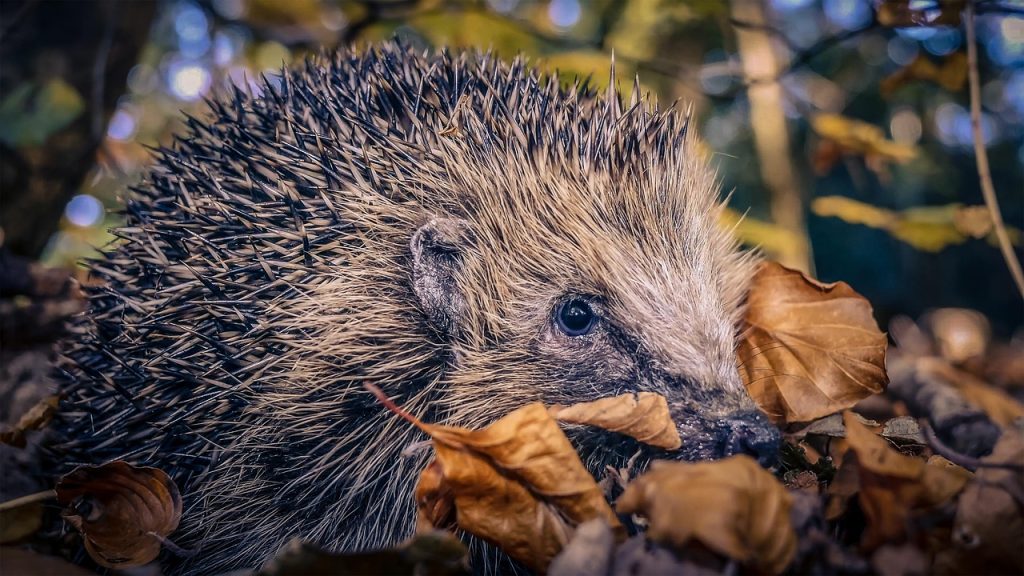
During the colder winter months from November to March hedgehogs hibernate in nests made from leaves and grass to conserve energy, often under hedges, sheds or in brushwood piles.
As November is bonfire season, please do check bonfires for hedgehogs and other creatures before lighting! It is preferable to relocate piles for burning to a fresh bonfire site!
Symbol of protection and resourcefulness
A clever trait is the ability to roll up into a tight ball of protective spikes, to defend themselves from danger. Many cultures therefore have seen hedgehogs as symbolizing protection, with their ball of untouchable spikes warding off danger and demonstrating the power of setting physical and emotional boundaries to protect oneself when feeling threatened.
Hedgehogs are also seen as a symbol of resourcefulness. They have adapted to live in urban settings and are now more common in urban than rural areas. Hedgehogs are opportunistic feeders with a varied diet and their heightened sense of sound and smell is well adapted to nocturnal foraging. Feeding after dark means that they largely avoid human contact. Hedgehogs play a valuable role in ecosystems, through their insect control, their foraging behaviour which helps aerate soil and through contributing to biodiversity through seed dispersal via droppings and via carrying on their spines.
Yet, once a common sight, the British wild hedgehog, is now classed as ‘vulnerable’ to extinction in the UK. In the 1950s there were over 30 million of these endearing mammals in Britain, yet today their numbers are fewer than 900,000. Populations in urban areas have declined by a third since 2000 and, even more alarmingly, in rural areas by a half.
Reasons for decline
As their name would suggest, hedgerows can provide a particularly favourable habitat for hedgehogs. Disastrously for hedgehogs, modern agricultural practices, which favour monocultures and use of huge machinery, have led to the loss of 50% of British hedgerows over the past 75 years. Additionally, industrialised agriculture frequently relies on repeated widespread applications of insecticides and herbicides on crop fields which has led to the degradation of soils and waters, destroying wildlife habitat and compromising nature’s ability to support abundant life throughout the seasons.
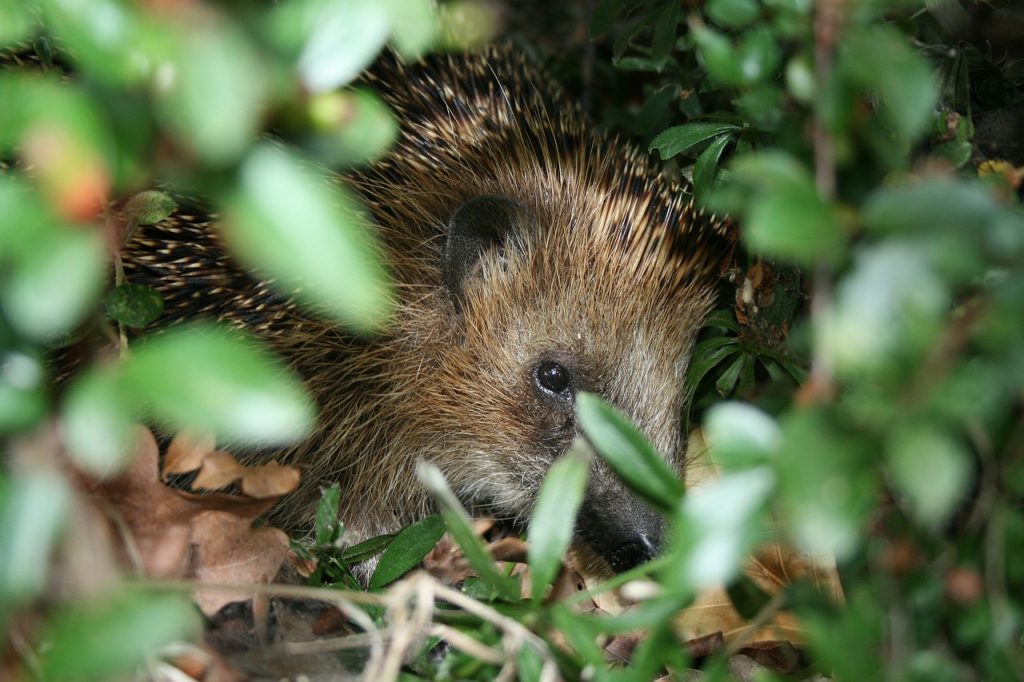
Overly manicured parks and tidy, fenced gardens also represent a hostile environment for wildlife and our spiny friends, diminishing food sources, giving little opportunity for safe shelter and hindering their ability to move about to look for food and a mate.
Although questions have been raised about the role of predation by other animals, such as badgers, this is not seen as a significant factor in hedgehog decline. These animals have co-existed for millennia, it is only now when human land management practices are having a detrimental impact on natural resources and a diminishing supply of common prey that threatens their natural balance.
Our changing climate poses further risks to hedgehogs. This year’s hot, dry summer made it harder for them to dig for worms and other insects in the dry, compacted soil, with the lack of puddles to drink from, leading to the risk of dehydration.
The severe decline in hedgehog populations has led to the UK’s first National Hedgehog Conservation Strategy being published at the start of 2025. This identifies the main threats to hedgehogs and suggests strategies of how to reduce them. After habitat loss and road collisions, unintended consequences from human intervention is listed as the number three threat. Well intentioned human actions to ‘help’ hedgehogs, can unwittingly cause harm.
Ways to help
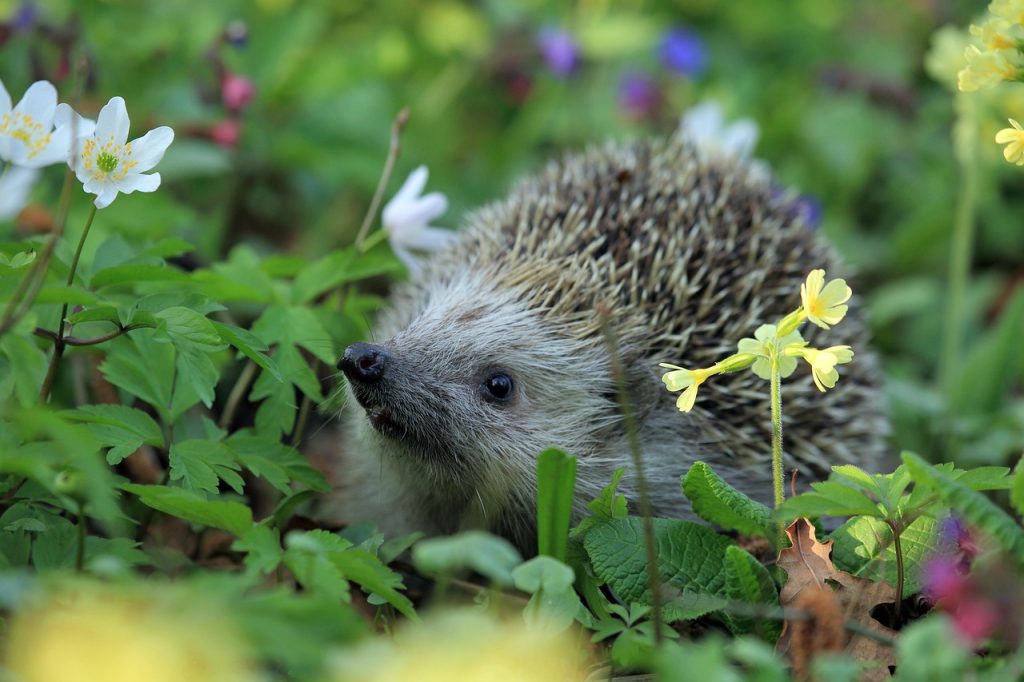
Overall, the very best way that we can help hedgehogs is to stop harmful practices and to work with nature to re-create native habitats which support insects, their natural food sources and provide shelter. The Hedgehog Street website has lots of helpful information.
- Don’t use slug pellets – these can poison hedgehogs too
- Don’t use pesticides or harmful chemicals in your garden
- Encourage a plentiful supply of the hedgehog’s natural food by creating micro-habitats that are perfect for invertebrates: stick piles; mounds of fallen leaves; compost heaps; and areas of long grass
- Create a pile with hawthorn twigs and deciduous leaves, particularly apple and cherry, suitable for hibernation
In dry weather place a shallow saucer of water on the ground to provide a drink. If you have a pond ensure that there is a shallow slope or plank to access as means of escape.
We can also help hedgehogs with their night-time wanderings by creating ‘Hedgehog Highways’. This involves making a small opening – a 13cm x 13cm square is sufficient – in fence or by digging out a small tunnel underneath a wall or fence, lines to allow passage between gardens and beyond. Or, even better… replace fences with a native hedgerow!
It is also helpful for building up a picture of hedgehog populations to log sightings. At present there are few hedgehog sightings logged in our area, so if you do see one please log it via one of the websites listed below. Or, if you prefer, let us know and we’ll log it for you: info@greenwestcott.org.
If anyone reading this has an interest or knowledge to share on hedgehogs (or other species) and would like to get involved with specific projects please do get in touch. We are hoping to host a series of wildlife habitat workshops next year and welcome any help with this.
Jakki Phillips
Report hedgehog sightings at:
https://www.surreywildlifetrust.org/wildlife/helping-wildlife-home/hedgehog-hotspots