
THE COST OF ENERGY
2025 has seen the hottest spring and summer on record, with the Met Office declaring that another summer as hot or hotter is now 70 times more likely due to the climate crisis- largely caused by greenhouse gas emissions from burning fossil fuels for energy.
As we move into the autumn months, thoughts turn to keeping our homes warm during the winter. The cost of electricity bills continues to be an issue of concern to the majority of the population, with prices three times higher than before the global energy crisis (triggered in 2022 by Russia cutting natural gas supplies to Europe due to their opposition to the Russian invasion of Ukraine).
What is the reason for continued high electricity prices?
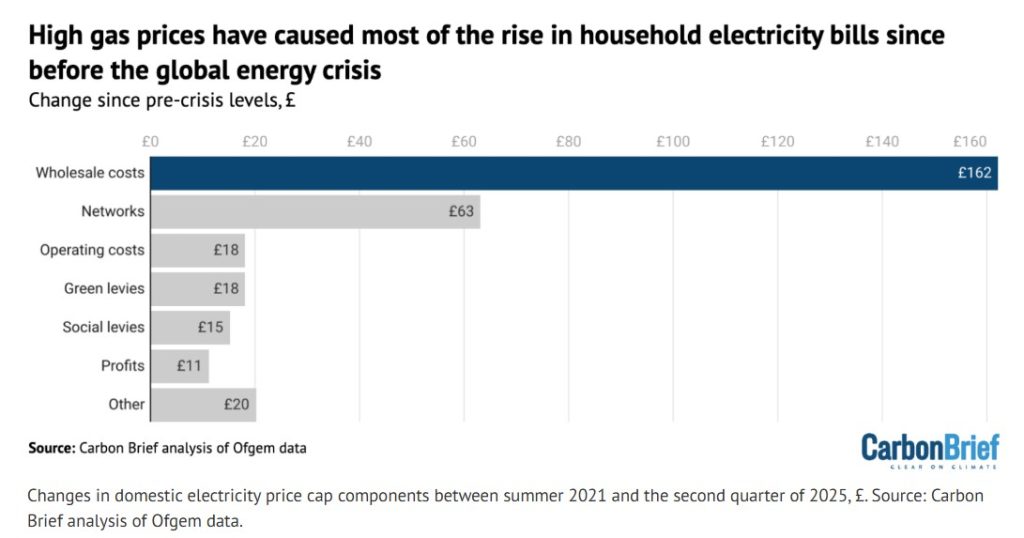
Spoiler alert…. it is not due to ‘green levies’ or net zero policies. The continued high cost of our energy bills is largely due to the UK’s continued reliance on gas-fired power stations to produce electricity.
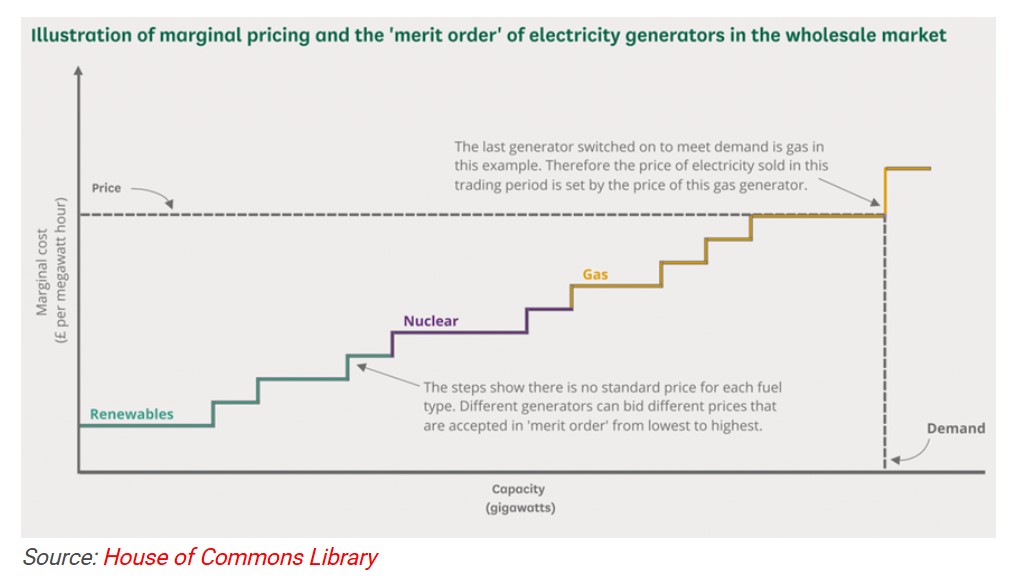
The UK operates a system whereby it ranks electricity generating technologies from the cheapest to the most expensive and calls upon them, in order of cost, to meet demand. As renewables, being generated from the wind and sun (free), are the cheapest source, these are called upon first. Although renewable energy supply is increasing, there is not enough yet available to satisfy our demand and so more expensive energy sources are needed.
In every half-hour period the most expensive source of energy called upon to meet demand determines the electricity price – and for 98% of the time this is gas.
A new report published by Greenpeace shows how households and businesses could be saved over £5 billion a year on energy bills by 2028 through energy system reforms that would assign gas plants as a strategic reserve, rather than be part of the wholesale market, thus ending gas-fired power stations ‘unfair profiteering’ and lowering bills.
Reducing the cost of electricity bills would in turn help with decarbonization by boosting the uptake of cleaner electric technologies, such as heat pumps, by making them cheaper to run.
Reducing demand
It is rarely acknowledged that, in order to enable the decarbonization of the energy system, there is also a need to reduce demand for energy and decrease consumption. Energy efficiency is key, both in industry and in our homes.
‘The greenest energy is the energy we don’t use.’ (World Economic Forum)
References:
https://www.iea.org/topics/global-energy-crisis