Last November in Westminster Central Hall, MPs, business leaders, cultural figures and faith and community leaders gathered to hear experts present powerful evidence of the interconnected threats facing the UK.
The National Emergency Briefing on the Climate and Nature Crisis was an invitation only event where experts – in fields ranging from economics and health to national security – gave stark science-based assessments of the situation and the scale of action needed to adapt to the rapidly changing climate and ecological situation.
An Honest Conversation
“The UK is facing a national emergency not only because the climate is changing, but because the living systems that regulate that climate, protect our homes, and feed our people are breaking down. This is exposing our country to escalating risks: floods, fires, heatwaves, food insecurity, and economic instability. …This is not an environmental issue on the margins of policy. It is a national security issue.” (Nature – Prof Nathalie Seddon)
Nature is not a ‘nice to have’, it is critical national infrastructure.
The climate crisis is a ‘”threat multiplier, making existing threats worse, or more frequent, and fuelling new ones – climate shocks fuel global instability…Competition for water, food and land is rising…. [we are} not yet acting as if peace and addressing the climate crisis are two sides of the same coin.” (National Security – Lt General Richard Nugee CB CVO CBE). Emergency doctor, Prof Hugh Montgomery OBE contributed to the report which led The Lancet to declare that ‘Climate change is the biggest global health threat of the 21st century’ in 2009. He says, “we were pointing out risk, but we weren’t adequately pointing out the hazard – because I don’t think any more it’s about risk – it’s about survival.”
Prof Paul Behrens added that the crisis presents “a threat that will affect every family…a threat for which we are woefully unprepared …the increasing pressure on global food supplies in the face of accelerating climate change and nature loss…. What concerns me most…when families can’t afford to feed their children, societies break down”
The scale of action required
“We risk sliding into a state of permanent crisis management. …. Every year we delay urgent investment in resilience and emissions reductions, the window for successful action gets smaller…Until we stop burning fossil fuels, extreme weather will continue to get worse. So, cutting emissions isn’t enough. It isn’t a choice. We must also adapt to protect people and livelihood” (Weather Extremes – Prof Hayley Fowler)
“What would reducing emissions have to look like? …Well, firstly, technology…technology is absolutely a prerequisite of delivering on Paris [climate agreement], but after choosing to fail on climate change by our leaders for the last 30 years is now far from sufficient. We also need…profound shifts in our social norms.” (Climate – Kevin Anderson)
“We currently produce and consume in a way that doesn’t factor in our impact on the planet. And that is an economywide problem.” (Economics – Angela Francis) Our economic system is unravelling the web of life that it depends on: subsidising pollution; rewarding short-term extraction, discounting the future
Additionally, the system that we rely upon to feed us “is also undermining foundations that we depend upon. The food system itself is damaging the very foundations of our food security. It’s a large driver of the UK’s greenhouse gas emissions – it drives catastrophic habitat loss, pollutes our water, pollutes our air, depletes our freshwater, drives antimicrobial resistance and creates the conditions for the emergence of new pandemics.” (Food Security – Prof Paul Behrens) Animal agriculture in the UK occupies 85% of agricultural land and relies on extensive land use overseas for imported feed and livestock. It drives 80% of the UK’s agricultural emissions and causes the majority of biodiversity loss
“Without a functioning economy, without food supply available to us, we cannot run a health service. We cannot have health….I recognise an emergency. This is one…There may be no liveable future for us and our children…we haven’t got time for doing a little bit of recycling, we need transformational change now if we are going to survive.” (Health, Prof Hugh Montgomery OBE)
Act Now
Many of the speakers at the briefing highlighted how many actions that help tackle the crisis have clear benefits for human health and wellbeing.
Energy Transition – “Thankfully the evidence is clear that an energy system powered by renewables, will indeed be more affordable and more economically secure…. we also know how to get there …in a way that is genuinely just for ordinary people.” (Energy Transition – Tessa Khan)
Economy – “We need to stop funding harm and we need to reward restoration…We have to end these subsidies [that support pollution] and apply a simple universal test to spending and investment – does this harm the biosphere, or can it help it?” (Nature – Prof Nathalie Seddon)
“We need to consistently reward the businesses that are doing the work to be competitive in a new world where success includes lowering carbon, restoring soils, keeping forests standing, circular use of resources, and less waste. All things that add to our resilience.” (Economics – Angela Francis)
Adaptation – “And adaptation pays for itself. Every pound we invest now saves many more pounds in avoided damage and disruption. And it also creates skilled jobs. Adaptation is a triple win – good for the economy, good for communities and good for nature.” (Weather Extremes – Prof Hayley Fowler)
Plant-rich diets – “Scientific consensus is clear that moving to a plant-rich diet is one of the most impactful actions that individuals can take” (Food Security – Paul Behrens) This would reduce emissions, help bring a healthier population – reducing pressure on the NHS, free up land for nature and climate resilience.
New social norms – “Targeting a climate resilient, sustainable world involves fundamental changes to how society functions, including changes to underlying values, worldviews, ideologies, social structures, political and economic systems, and power relationships.” (Intergovernmental Panel on Climate Change).
The energy footprint of the wealthiest 10% in the UK is nearly five-times higher than the lowest 10% (Climate – Prof Kevin Anderson) Those of us in these households therefore have more ability – and responsibility – to act to cut these discretionary emissions.
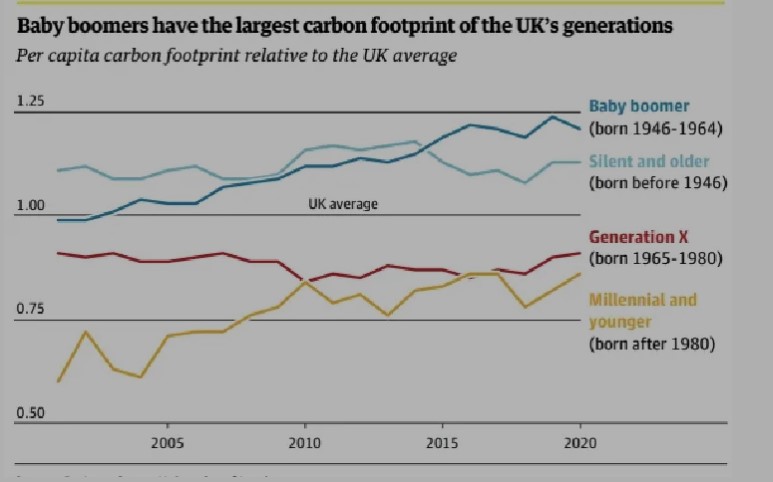
There is also a generational divide with baby boomers (born 1946-1964) having the largest and growing carbon footprints, significantly higher than generation X and millennials.
The National Emergency Briefing website has more information and recordings of each of the expert contributions: health; food security; nature; energy transition; weather extremes; climate; tipping points; economics; national security.
The Government has also recently published a national security assessment on ‘Global biodiversity loss, ecosystem collapse and national security’ which is available to read here.
Overall the message is: this is urgent, we need to act and, in doing so, we can come together to build a healthier, more equitable, resilient, caring and beautiful living world.
Things you can do
You may like to add your name to the open letter calling for a televised emergency briefing to the nation, like we saw during the pandemic – sign the open letter here
Write to your MP, expressing your concerns and urging them to act in support of the policies needed
Share this information
Join together with others – there are many local projects working to help bring positive change and restore nature – check out the list here
Grow some of your own food
Plant trees, hedges & flowers for pollinators
Move towards a largely plant-based diet
Do feel free to get in touch at info@greenwestcott.org to share your thoughts, or suggestions