
It is well known that connection with nature is beneficial for our mental health and, reciprocally, a key factor in encouraging wildlife-friendly behaviour. At the time of writing this, at the beginning of March, the warming air is filled with the melodious calls of robins, blue tits, dunnocks and blackbirds all announcing that spring is well and truly on its way! Listening to and watching birds as they hop and flit about gathering food and nesting materials is a pleasurable and simple way to bring nature into our everyday lives.
Feeding birds is one of the positive ways that we can play our part in helping nature to thrive. Putting out bird feeders with suet balls, seeds and nuts gives birds extra help to keep up their energy levels during the coldest, sparcest month. Even better, we can help improve natural food sources, even on the smallest patch of ground.
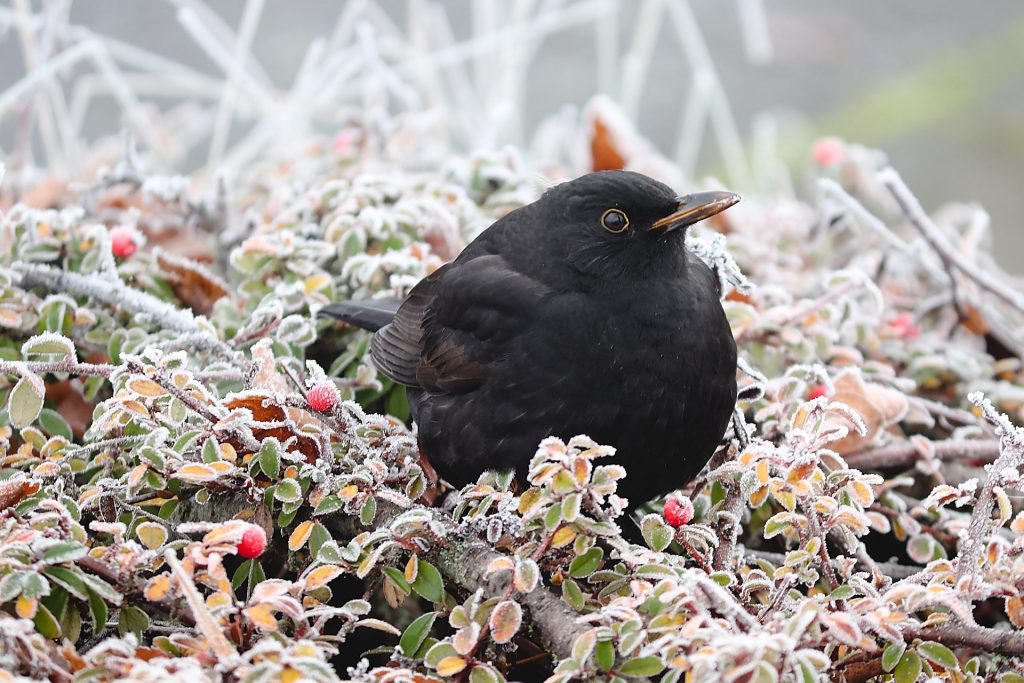
Providing a natural array of food
Wild birds in the UK have a varied natural diet, depending on the species and the season. During the warmer months, many birds feed on fruits, insects and larvae, and rely on fallen fruits/grains, seed heads, berries and small invertebrates – like spiders, snails and worms when the ground isn’t frozen – to make up their diets during the autumn/winter.
Bearing this in mind, there is much we can do in our gardens and outdoor spaces to boost food availability for our feathered friends.
Planting
Trees, shrubs and climbers bearing berries are excellent for birds, particularly native varieties. Especially good for birds are: Alder Buckthorn, Guelder Rose, Hawthorn, Holly, Honeysuckle, Ivy, Rowan and Spindle. If you have fruit trees, leave any fallen fruits on the ground, rather than clearing them away.
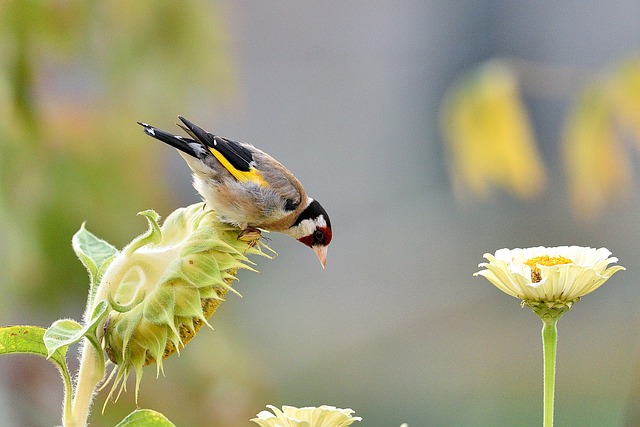
Wildflowers including knapweed, dandelion and thistle have valuable seedheads for birds, as do sunflowers, cornflowers, teasles, rudbeckia and echinacea. The most important thing is to not tidy these up at the end of the summer but to leave the seedheads intact, so that they provide a food source into the darker months.
Evergreen shrubs provide useful shelter for birds against the weather and predators, like sparrowhawks, and are good for early nesters, while broad-leaf trees are still in bud. Similarly thorny shrubs are favoured as nesting sites as they make a good deterrent to potential nest predators.
Habitat
Providing places for invertebrate life to thrive is also crucial, in helping birds survive. Leaving some areas with leaf litter and stone or dead wood piles, saves you work and makes good homes for creepy crawlies and a feeding place for hungry birds.
Mulching garden beds keeps soil warmer and protected and encourages insect life too.
Making a dead hedge is a fantastic way to utilise garden waste such as prunings, twigs and sticks. These create an ideal habitat and protection for insects and nesting birds, as well as small mammals and amphibians.
Nestboxes come in different shapes and sizes to suit different bird species. Tits and nuthatches favour small hole entrances, sparrows like to nest in a terrace of boxes, while robins and wrens like more open-fronted boxes. Specialist boxes for birds like swifts and barn owls are also available.
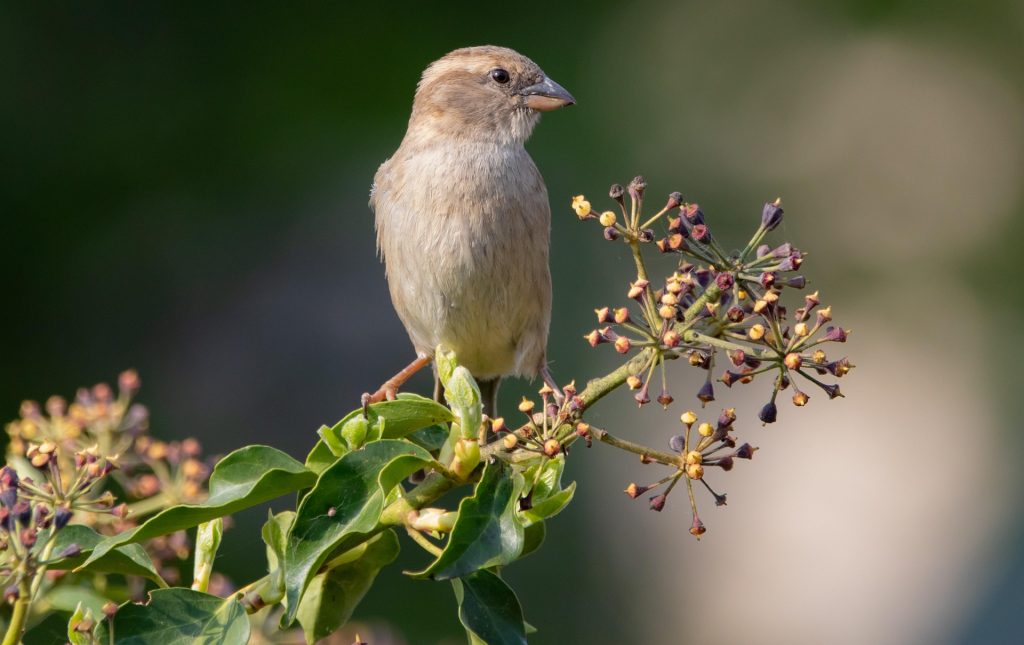
Ivy is a superstar when it comes to wildlife! As well as providing shelter within its thick glossy leaves for birds, it offers berries that are richer in fat than others and appear later and last for longer into the cold months too. Its late-flowering is also a great boost for pollinators.
Water
Birds need access to clean water throughout the year, for drinking and to bathe in. Even a tiny pond or a plant saucer filled with water can be of great value to a thirsty bird. A stone, within it, to perch on is helpful too.
Take part in citizen science
Taking part in the Big Garden Birdwatch in January is always an enjoyable annual activity at Westcott Community Garden, but did you know that by regularly monitoring the bird species that visit your garden you can help provide valuable understanding of how we might further improve gardens for wildlife. Check out the British Trust for Ornithology (BTO) Garden Birdwatch.
Many websites, including BTO, have guides to help you identify different bird species and the ‘Merlin’ app is great in identifying birds through their birdsong.
Urgent advice
Finally, some urgent, new advice on feeding birds from the RSPB – feed seasonally, feed safely