
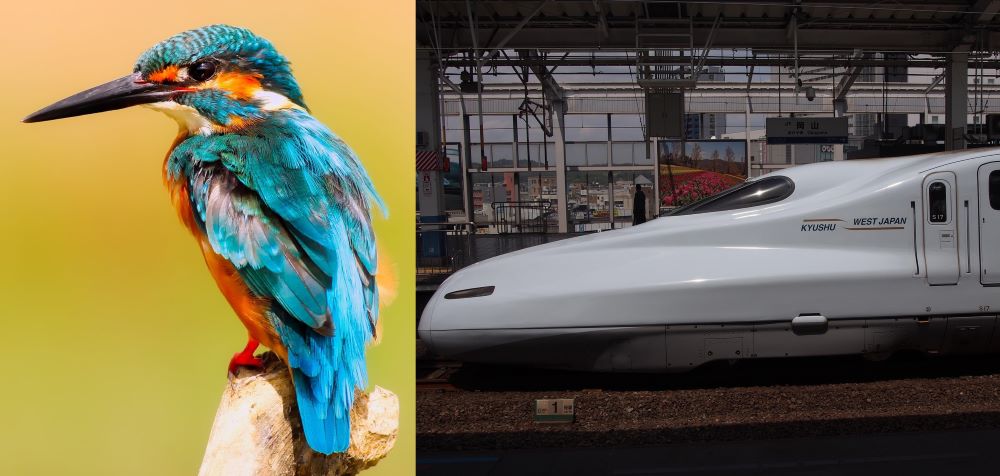
Designers often look to the natural world for inspiration and problem-solving – from burrs stuck in a dog’s fur providing the idea for Velcro fastenings to the Japanese Shinkansen bullet train whose nose replicated the shape of a kingfisher’s beak, in order to eliminate the ‘boom’ noise when entering tunnels.
This summer has been hottest since records began in 1884, according to provisional data from the Met Office. Rainfall was generally scarce, with drought declared in Wales and more than two-thirds of England, and wildfires caused devastated landscapes from Dunwich Heath, Suffolk in the east to the Brecon Beacons in the west. Human-induced global heating is impacting lives here and now and conflict over resources is increasing.
What, then, might the natural world teach us about how to best face the challenges that are mounting up before us? Rare Earth on BBC Radio 4 this week asked – is nature all about survival of the fittest or do we all need to work together?
The term ‘survival of the fittest’ is commonly associated with Darwin’s theory of evolution. This term was in fact coined by the polymath Herbert Spencer and did not appear in the original 1859 publication of On the Origin of Species.
However, Darwin was persuaded to incorporate the phrase into the fifth edition, published a decade later. At a time when empire, industrial revolution and capitalism were in the ascendancy, the idea of ‘survival of the fittest’ took on a life of its own! Superiority and domination were lauded and the phrase was advocated as a means of justifying economic inequality, colonization and racism – misrepresenting Darwin’s intended meaning.
Darwin used ‘fittest’ to refer to members of a species whose traits give them the best chance of surviving and reproducing in their specific environment. Thus, in certain contexts, camouflage, flexibility or cooperation might be more “fitting” than size or strength.
Modern evolutionary biology continues to provide new insights into our understanding of “fitness”. In her book ‘The Symbiotic Planet: A New Look for Evolution’, Lynn Margulis writes about the symbiotic relationships prevalent in nature which ‘aren’t just chance partnerships; they’re vital connections that have played a big role in how species have evolved over time.’ For example:
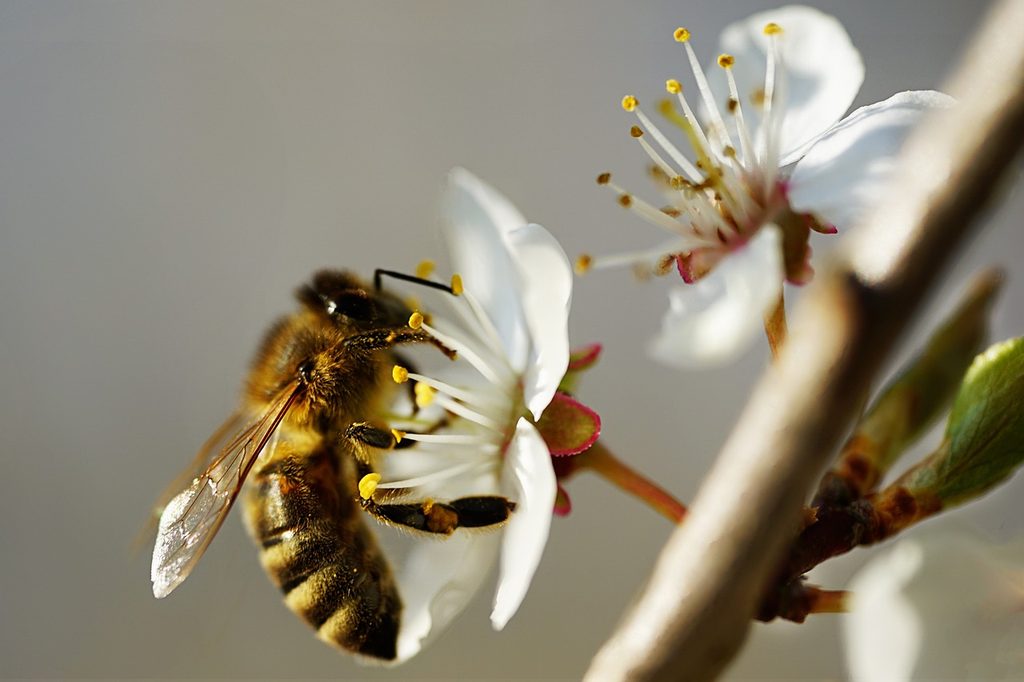
Bees mutually beneficial relationship with flowering plants, whereby bees collect nectar and pollen for food while transferring pollen between flowers for their reproduction.
Oxpecker birds who remove and consume ticks from large mammals, such as elephants and buffalo, reducing tick-borne disease. Additionally, they alert their hosts to nearby predators.
Research carried out by Suzanne Simard, ecologist and author of ‘Finding The Mother Tree’, popularised the idea of the ‘wood wide web’. This showed how trees receive and exchange nutrients and information with each other via a network of soil fungi mycelium, which connect the forest community. In return the forest provides the fungi with energy-rich carbon, via photosynthesis.
Life collaborates for mutual benefit.
While the competitive side of nature is often visible and compelling – male red deer locking antlers to compete for mating rites; lions and hyenas competing for prey – cooperation is quieter and slower, yet fundamental to the thriving of interconnected and interdependent life on our planet.
Theories of evolution remind us that life is not static, it is constantly revealing itself. We are part of the natural world – we are shaped by it and we are constantly shaping it in return.

While attention-grabbing headlines highlight conflict, disasters and stoke division, more positive stories, of communities coming together to adapt to changing circumstances and myriad acts of caring and kindness, go under the radar. Yet these are the stories that are perhaps more deserving of our attention and that may be key to our ‘fitness’, not just to survive, but to thrive.
Jakki Phillips
For stories of positive action being taken visit https://www.antidotelive.studio/action
References:
https://www.thoughtco.com/survival-of-the-fittest-1224578
https://www.sciencenewstoday.org/survival-of-the-fittest-what-darwin-really-meant
https://www.sciencenewstoday.org/survival-of-the-fittest-what-darwin-really-meant