
Having just experienced the hottest May on record where many of us felt ill prepared for such hot weather in Spring, followed by the first few days in June bringing torrential down pours across the county, it is hard to deny that the climate is changing.
72% to 77% of UK adults report being worried or fairly concerned about climate change, Department for Energy Security and Net Zero (DESNZ) and King’s College London (2025). These figures are encouraging and yet, the intensity of that concern has softened (DESNZ, 2025). The proportion of adults who describe themselves as “very concerned” has unfortunately declined.

There is a growing lack of urgency about the rate and acceleration of climate change among the population which is very concerning. There may be many reasons for this, from issue fatigue disillusionment and peoples belief that individual impact is minimal (DESNZ, 2025), coupled with a lack of reporting of the facts by media and social media and an underlying narrative away from climate denial on to one that states that mitigation policies are too expensive, that renewable energy is unreliable or harmful, and that it is too late or pointless for individual countries to take action, Hayes et al (2025). This narrative acknowledges the warming trend but focuses heavily on a “discourses of delay” resulting in a growing trend of apathy among the population.
Meanwhile the social media ‘machine’ pedals a narrative of conspiracy theories that preserve the myths that initiatives such as Net Zero are a restriction on human freedom, Gardam et al (2025). Influencers on social media disseminate disinformation which spreads like wildfire across social networks. Although the spread of disinformation is nothing new and has been seen as far back as the 1960’s where fossil fuel companies, politicians and think tanks perpetuated a discourse which minimised the impacts of climate change (European Digital Media Observatory,(EDMO) (2025)).
From Trump’s withdrawal from the Paris Agreement, to Keir Starmer’s U Turn on the Green Investment Pledge you would not be wrong in thinking that world leaders certainly are not acting with any urgency about climate change.
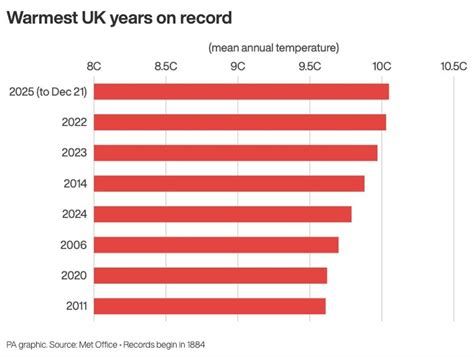
So should we be concerned and how can we ascertain that the information we are receiving is correct and legitimate?
On 27 November 2025, Westminster Hall hosted a National Emergency Briefing on the climate emergency. More than 1,200 people were invited, including, politicians, leaders from business, culture, faith, sports and media to hear from ten of the UK’s foremost experts in their fields.
Topics covered were – Weather Extremes, Climate, Tipping Points, Nature, Food Security, Health, National Security, Economics and Energy Transition. From this briefing those present were informed of the current scientific findings and gave comprehensive advice on how the impacts will affect us and offered solutions to the problems faced.
Some highlights from the briefing I have laid out below:
- By 2050, 1 in 4 properties – 8 million in England – will be at risk of flooding
- Heatwaves in Europe are intensifying faster than anywhere in the world and much faster than climate models predict.
- In 2022, nearly 3,000 people in England died from heat related causes – more than from road traffic accidents..
- The CO2 we’re putting in the atmosphere now is not being absorbed at quite the same level as it was previously by the biosphere.
- The UK is the first nation to have cut its emissions by 50% since 1990, but, that excludes international aviation and shipping and our imports and exports. If you include those, the reduction is about 20% since 1990 – 0.6% every year on average.
- UK monitored wildlife populations have declined by around 19% since the 1970s, with 1 in 6 species now at risk of extinction.
- Pollinators contribute over half a billion pounds annually to UK agriculture – but pesticides and habitat loss continue to push them into steep decline.
The State of the Climate report from 2024 stated – “We are on the brink of an irreversible climate disaster.” “Much of the very fabric of life on Earth is imperilled. This is a global emergency beyond any doubt”.
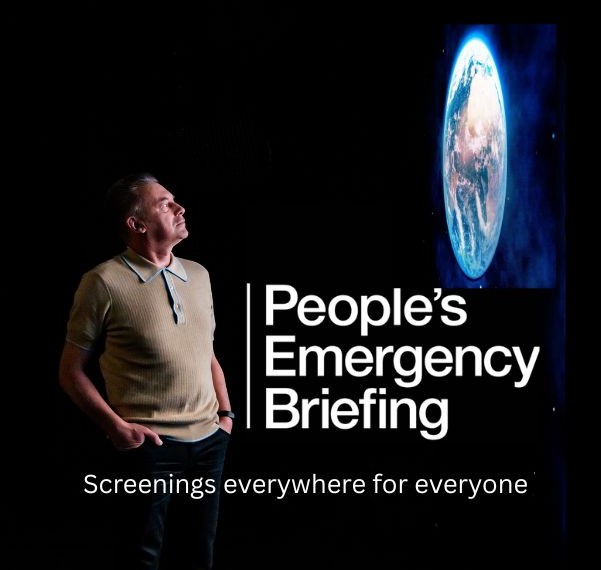
Hosted by Chris Packham and featuring extracts from the expert briefings, a short film based on the National Emergency Briefing has been made. The ‘People’s Emergency Briefing’ is now available to watch across the UK in village halls, churches and community centres, with the aim of bringing people together across local communities to hear the evidence and discuss how to respond.
If you are interested in informing yourself of the state of our world and what we can all do about it, please join us at a free screening of the People’s Emergency Briefing at 7.30pm on Monday, 13th July in St John’s Chapel, Furlong Road, Westcott.
Tickets are limited, so please book to reserve your place at https://www.tickettailor.com/events/greenwestcott/2255526
Whilst so much of these pieces of information are shocking and difficult to accept, they are the facts from leading experts in their fields. This needn’t be a moment of despair, but one of hope if we all pull together to seriously address the issues of our precious world. After all, our very lives depend on it.
References
Department for Energy Security & Net Zero (2025) Public Attitudes Tracker Available at:
Gardam, C., Riedlinger, M., Angus, D., Ying & Tan, X. (2025) Multimodal narratives of climate denial: A novel, visual-first methodology for analysing conspiracy theory discourse on Instagram, Discourse. Available at: https://www.sciencedirect.com/science/article/pii/S2211695825000959
European Digital Media Observatory (2025) Available at: https://edmo.eu/publications/the-same-old-story-a-heat-wave-of-climate-disinformation/
Hayes S, Gabbatiss J, Butler C. (2025). From Climate Scepticism to Discourses of Delay in UK Editorials. Public Underst Sci. Available at: https://pmc.ncbi.nlm.nih.gov/articles/PMC12449614/
Nicolosi, E., Medina, R., Brewer, S., Vorkink, M and Allred,A. (2025). The new denial: climate solution misinformation on social media. Available at https://www.cambridge.org/core/journals/global-sustainability/article/new-denial-climate-solution-misinformation-on-social-media/F10A70013E056587C9881DFBC3E4F877